Table of Content
Off-field problems derailed his path to superstardom, but his Montreal moonshot serves as a reminder of his off-the-charts power. It comes as no surprise that of the 10 farthest home runs hit, five happened at Coors Field. It’s the most hitter-friendly MLB park thanks to the thin air helping make baseballs fly out of the stadium. Interestingly, Braves’ outfielders account for four of the longest MLB home runs in 2021.
At this point in his career, the 37 homers and 108 RBI are both single-season career-high marks for the middle infielder. Historian Mark Gallagher estimated that the home run Mantle hit in September of 1960 at Tiger Stadium traveled a whopping 643 feet. The ball actually sailed right over the right field roof of the ballpark, which is mind-boggling to contemplate.
League leader in home runs, both leagues
It is due to his immense popularity and constant involvement in the tape measure process that he is often thrust into the muddle of misrepresentation. By his own account he hit the longest home run of his career on May 22, 1963 at Yankee Stadium. The ball struck the facade on the right-field roof approximately 370 feet from home plate and 115 feet above field level. Almost everyone in attendance believed that the ball was still rising when it was interrupted in midflight by the roof structure. Based upon that belief, this drive has commonly been estimated at about 620 feet if left unimpeded. However, the reality is that the ball was already on its way down, and those reporting the trajectory were victimized by a common optical illusion.

Similarly, Comiskey's left-field roof was also visited by many batted balls, but only one is confirmed to have cleared it on the fly. That homeric deed was performed by the powerful Jimmie Foxx on June 16, 1936. As Ruth's talents waned in the early 1930s, Foxx began his ascendancy. In 1932, the muscular "Double X" almost equaled Ruth's season record of 60 home runs.
Giancarlo Stanton, Miami Marlins outfielder – 504 feet, Coors Field
If not for hitting a transformer on Tiger Stadium's roof, the baseball would have experienced a further journey. On a ball that sped 124 mph off the bat, ESPN's Home Run Tracker estimated a distance of 539 feet if unhindered. Strawberry hit another dinger during New York's Opening Day victory and matched his previous season's career high with 39 homers that year.

After playing a major role in the Red Sox 2004 championship drive, Ortiz joined an all-star team for a tour of Japan. In a 5-3 win against the Japan Stars at the Tokyo Dome, Ortiz drove a ball into the lights high above the upper deck in right field. Richie Sexson stood so tall in the batters box you would think that he was tall enough to play in the NBA. The 6’6″ journeyman outfielder had great extension, enough to hit 306 career homers, mostly during his prime with the Seattle Mariners and the Milwaukee Brewers. He smoked his longest career home run in Arizona off of Chicago Cubs pitcher Francis Beltran.
Ryan McMahon on August 9, 2022: 495 feet
The ball would have kept going, lending to a final true-distance calculation of 530 feet. Jose Canseco's upper-deck blast helped the Oakland Athletics defeat the Toronto Blue Jays in the 1989 American League Championship Series. It did not, however, journey 540 feet as have some suggested. ESPN's Home Run Tracker yielded a projected true distance of 443 feet.
It’s his fourth season of 20-plus homers since 2018, and he’s likely to collect just the second effort of 30-plus homers (he hit 30 with Tampa Bay in ’18). Whenever I have a hankering for a real moonshot, I usually enjoy perusing through some Adam Dunn highlights. He proved to not just be a one-trick pony, either — he could hit them far and hit them often, as he’s on the Reds’ single-season home run leaderboard.
Amazingly, many of those records remain unequaled, which is to say that Ruth is a true athletic anachronism. In virtually every other field of endeavor in which physical performance can be measured, there are no Ruthian equivalents. In 1921 alone, which was Ruth's best tape measure season, he hit at least one 500 foot home run in all eight American League cities. There should be no doubt about the authentication of these conclusions.
Though it must be said again that with no one else at that time hitting as he did, it’s not out of the realm of possibility that Ruth could belt one that far. Legend has it, that a simple tape measure was used to determine the estimated 565-foot mark. Some baseball experts could argue that the outdated methods used to measure a home run’s distance are quite obsolete by today’s standards. But since a source like ESPN doesn’t challenge it, it still stands as the second-longest today. In fact, he hit more home runs than any other player during the 1970s.
A perfect swing, the high altitude and maybe, just maybe, the bat he used all played a role. When Meyer came up for the at-bat in question that night, he had already homered. But players on the field thought it had only gone out because of the thin Rocky Mountain air. Meyer's high school coach in Honolulu still raves about his power, saying he could come out right now and still hit homers. The first baseman was even given the Barry Bonds treatment in his school days, getting intentionally walked with the bases loaded.
While it’s possible Oklahoma State gave a favorable measurement, the 513-foot homer would easily be the farthest home run in 2022 at any level of baseball. This blast, the second on the list from Dunn, makes his first look like a chip shot and this time he may have used the driver. On August 10th of the 2004 season, Dunn connected on one of his 46 on the season and put himself in the top 3 for farthest dingers. He also became the only man, and still stands as so, to hit a ball clear out of The Great American Ballpark in Cincinnati. He hit the ball to the deepest part of the park in center-field, proving why he show up on our list twice. Dunn was one of the premier home run hitters during his 15-year career that lasted from 2001 to 2014.
Fewer than one in a million men are capable of powering a ball 450 feet against major league caliber pitching. It is for that reason that we find their actions so thrilling, and will always want to identify them for special reward and distinction. The next truly great slugger in the chronology of long-distance hitting was Ted Williams, who arrived on the major league scene in 1939. His slender physique belied his subtle strength and natural ability to generate bat speed. On May 4 of that year, Williams cleared the towering right-field grandstand in Detroit and served notice that he was as powerful as he was refined with a bat in his hands.
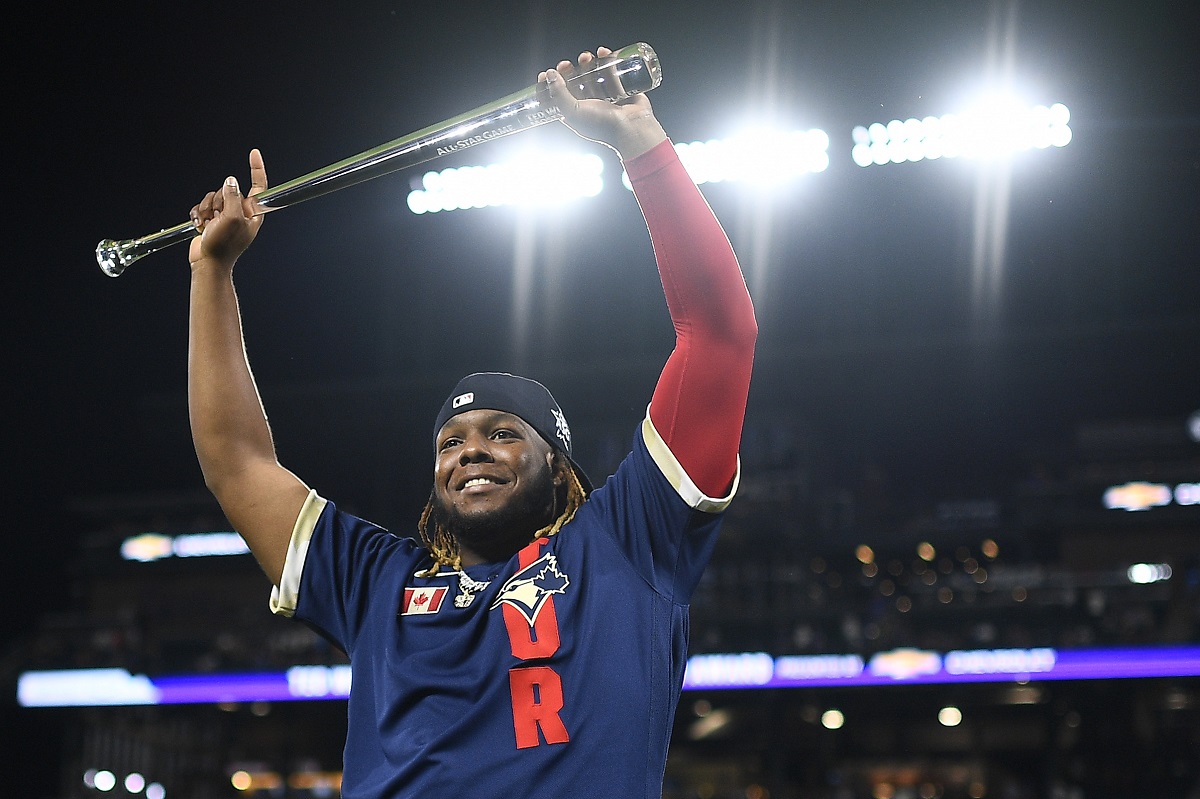
On Aug. 10, 2004, in a matchup against the Los Angeles Dodgers, Dunn delivered a moment he’ll never forget. In what remains the longest home run ever at Great American Ball Park, the baseball rocketed out and finished with an estimated distance of 535 feet. On June 2, 1987, the Denver Zephyrs hosted the Buffalo Bisons at Mile High Stadium. Aided by the thin air, much like baseballs hit out of Coors Field today, Joey Meyer launched a towering blasted that traveled an absurd 582 feet and is the longest homer ever caught on video. Larry Robinson-USA TODAY SportsWashington Nationals outfielder Juan Soto hit the longest home run in the Home Run Derby in 2021.
Mickey Mantle, 565 Feet (
As Sports Illustrated's Cliff Corcorannoted, Jenkinson also acknowledged The Bambino as owner of the three longest home runs ever hit in his book The Year Babe Ruth Hit 104 Home Runs. A 575-foot dinger at Navin Field in Detroit isn't the most interesting of the tales, but it'd top this list. Maybe Mantle didn't quite hit it 565 feet—William Jenkinson suggested 510 feet as a better approximation. There's still no doubting Mantle's standing as one of the greatest, strongest hitters to ever live. Bob Moore said the ball would have carried 525 feet if not for hitting the lights. The casual fan might not fully appreciate the modest masher, who becomes eligible for Hall of Fame consideration next year.
In order for the ball to be rising at roof level, it would have to have been traveling at a lower angle than that which produces maximum distance. If Mantle had provided the same power or velocity, but had launched the ball at a higher and more efficient angle, it would have passed out of Yankee Stadium at a height of over 200 feet! Mantle hit the facade on two or perhaps three occasions, but never cleared it. By his own admission, during his 18-year career at Yankee Stadium, which included thousands of swing variables, he hit several balls to right field in an optimum manner.


No comments:
Post a Comment