Table of Content
People loved it; they thought it one of the best sonnets ever written. The two similes that swam "into his ken" as the poem formed itself in his mind are in keeping with the language of travel and discovery that he uses in the octave of his sonnet. They give it a unity of imagery that makes of the whole a tightly knit statement of what was for Keats, ardent lover of poetry that he was, a profoundly felt experience. When Keats read Chapman’s translation of Homer, he experienced a new sensation. Earlier, he had enjoyed the beauties of other poets, but had no opportunity to visit Homer’s kingdom.

The octave offers the poet as a literary explorer, but the volta brings in the discovery of Chapman's Homer, the subject of which is further expanded through the use of imagery and comparisons which convey the poet's sense of awe at the discovery. He wrote this sonnet after staying up all night reading Chapman's Homer, and thinking, 'Oh my God, this is amazing. With Chapman's translation, he understands why Homer is so awesome, and he uses a bunch of metaphors and similes to get across that sense of discovery that he experienced.
Interesting Literature
He also makes it part of himself; absorbing it shows the extent to which he is devoted to art – he literally lives and breathes it. His use of an adjective in place of a noun “pure serene” is evidence that he struggled within the restrictions of our language, which would eventually prompt him to move onto Shakespearian formed sonnets. The poet begins his poem with the depiction of his travel ‘in the realms of gold’. It is a symbolic statement meaning that he has read about the riches of cultures and civilization which are as precious as gold in the world of literature. "“On First Looking Into Chapman’s Homer” by John Keats." IvyPanda, 5 Dec. 2022, ivypanda.com/essays/on-first-looking-into-chapmans-homer-by-john-keats/. This is the lead-up to his revelation moment, which comes, not coincidentally, when the sestet starts - that's that turn that we talked about before.
When he talks about traveling in the 'realms of gold', he's actually doing two things. It's just like 'the pagemaster', and these 'realms' are like libraries, or the books themselves. But he's also making an allusion to Odysseus, the hero of Homer's Odyssey, (remember, he's reading a translation of Homer) who traveled a lot in that tale. The reference to Apollo works well with both meanings, because Apollo is the Greek god of poetry, so that goes with the book/library meaning.
Planet
It signifies that he is quite aware of the literature of Apollo. This is IvyPanda's free database of academic paper samples. It contains thousands of paper examples on a wide variety of topics, all donated by helpful students. You can use them for inspiration, an insight into a particular topic, a handy source of reference, or even just as a template of a certain type of paper.
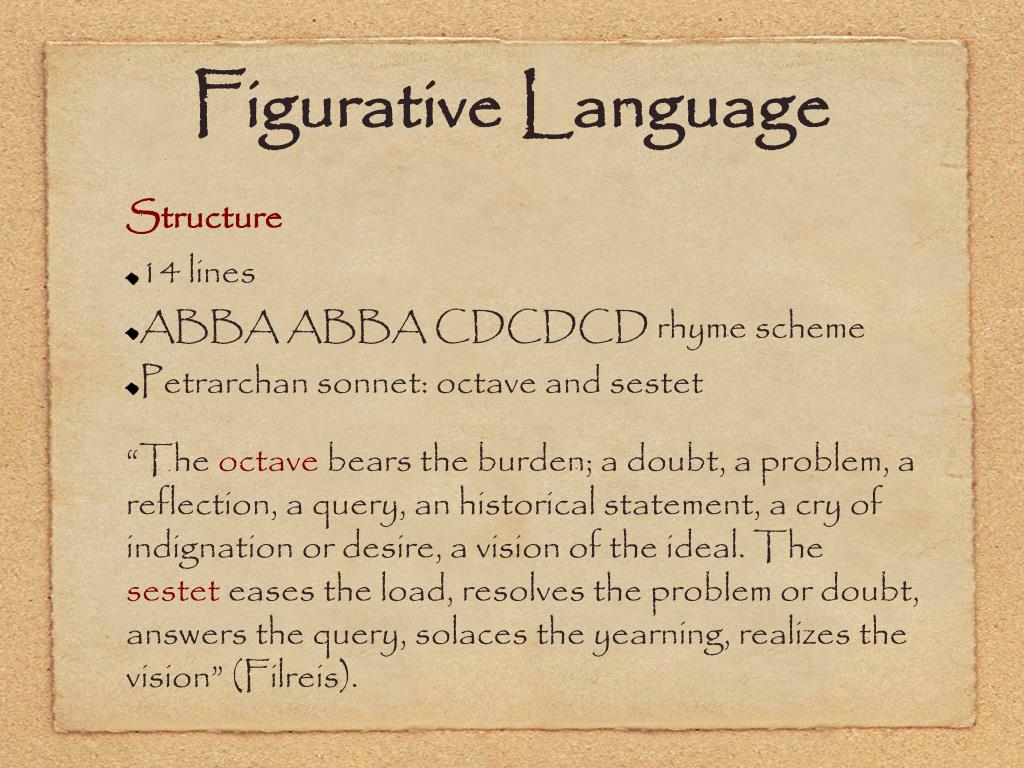
Keats altered "wondr'ing eyes" to "eagle eyes" and "Yet could I never judge what Men could mean" to "Yet did I never breathe its pure serene". The poem has become an often-quoted classic that is cited to demonstrate the emotional power of a great work of art and the ability of great art to create an epiphany in its beholder. The rhyme scheme is ABBA ABBA CDCDCD. The total effect is coherent and accomplished, a tribute to the skill of a gifted poet beginning to develop his craft.
Lines 5-6
Though Wordsworth and Shelley have also written some remarkable odes, no other English poet has returned to this form so often and with so much success. Keats has created an uplifting and thought provoking sonnet which encourages and inspires us to seek beyond the knowledge we have already gained, and to always aspire for more. This sonnet is so technically praised because not only is the content inspiring, but his appreciation of verse form and meter have been demonstrated faultlessly through out to create a satisfying piece of art in a mere fourteen lines. The fourth line moves away from those who enjoy art, to those who actually create it; “Which bards in fealty to Apollo hold.” The high, even sacred function that poets fulfil is indicated by their being the servants of a god, Apollo, and having sworn to follow him . “Fealty” indicates their dedication to Apollo and consequently their calling – the creation of poetry. The word choice of “gold” shows just how rich and rare these experiences are, and also alludes to the search for gold of the Spanish conquistadors, linking to his reference to Cortez in the Sestet.
This also reflects his hunger to be exposed to more and greater works. The repetition of the “l” sounds in “travelled”, “realms”, and “gold” emphasises the idea and ties the words together. The frequent and insistent use of first person narrative also reinforces the extent of Keats own personal knowledge; how well travelled and widely versed he is, and therefore we understand his epiphany upon reading Chapman’s Homer is well informed and trustworthy. However, Keats subverts this traditional structure to instead aid a before and after response; in this case the Octet ponders his travels and knowledge before Chapman’s Homer, while the Sestet then contrasts his enlightening experience of finally reading it. For more of Keats’s poetry, see our discussion of his classic sonnet about death, his beautiful ode to melancholy, and ouranalysis of his short poetic fragment, ‘This living hand, now warm and capable’.
"On First Looking into Chapman's Homer" is a sonnet written by the English Romantic poet John Keats (1795–1821) in October 1816. It tells of the author's astonishment while he was reading the works of the ancient Greek poet Homer, who was freely translated by the Elizabethan playwright George Chapman. After reading Chapman’s translation of Homer Keats uses the imagery of discovery and exploration to convey the idea that he is capable of creating his own work and formulating his own ideas.

At school he had taken part in a learning-game devised by the marvellously imaginative educator John Rylands, in which the boys arranged themselves on the school playground in the form of an orrery. Later, for the self-imposed project of translating Virgil, Keats was awarded a copy of Bonnycastle's Introduction to Astronomy, an early work of popular science fully up-to-date on the latest developments, including Herschel's discovery of Uranus. In fact, among the crowd of dazzled spectators with which Haydon has surrounded the triumphant Christ, are portraits of Wordsworth and Keats, as well as Voltaire and Newton. Lamb humorously took the pious Haydon to task for including Newton, "a Fellow who believed nothing unless it was as clear as the three sides of a triangle". The poetic company concurred, rising to drink to "Newton's health and confusion to mathematics". Many have pointed out that the discoverer of the Pacific was not Cortes but Vasco Núñez de Balboa.
Keats' friend, Clarke, actually pointed that out to him and told him, 'dude, you might want to change that.' But Keats left it as Cortez - maybe because Balboa has three syllables, while Cortez has two. Your English teacher won't take that as an excuse, but Keats can get away with it. If your English teacher says, 'Why did you say this,' and you say, 'Oh, it sounded good, it didn't make any sense though.' that's basically what Keats is doing. So that's why it's Cortez instead of Balboa, and why it's wrong.

The celebratory sonnet was completed the same night, in time to be delivered to Clarke in the following morning's post. The first four lines discuss the poet’s travels in the ‘realms of gold’ , and the second quatrain introduces Homer, epic Greek poet who wroteThe Iliadand The Odyssey, which tell the story of the Trojan War and Odysseus’ journey home following the war. A Petrarchan sonnet must not only be unified, like any other poem, but the thought must also make a change of direction, or "turn," at the beginning of the sestet. Keats' turn is his two comparisons taken from astronomy and exploration.
The final six lines may vary; common patterns are cdecde, cdcdcd, and cdccdc” (Meyer & Miller, 2019, p. 484). In other words, the poem’s form is tightly related to the poem’s content because the first six lines or the octave focus on the narrator’s travels and search for literary understanding. However, the latter six lines, or the sestet, are centered around the revelation and knowledge of the narrator, where a new translation of the Greek poem is delivered in a more profound manner to create awe. As the sonnet’s title suggests, “On First Looking into Chapman’s Homer” addresses Keats’s first look at Chapman’s translation and the feelings he encountered upon reading—and ruminating on—Chapman’s work. The first section of the sonnet, the octave, describes how Keats has read many versions of Homer’s stories, both the Iliad and Odyssey. Though he has traveled to intoxicating lands via earlier translations, his love of these works is born anew upon reading Chapman’s take on the Greek text.

Additional materials, such as the best quotations, synonyms and word definitions to make your writing easier are also offered here. This is also a very visual experience, and Keats emphasises Cortez’s eyes by calling them “eagle eyes”. This suggests that Cortez’s eyes are keen, observing strongly and are paying close attention to detail, just as Keats thoroughly observed all of Chapman’s Homer, so much so that he felt as though he was breathing it in and literally surviving though it.


No comments:
Post a Comment